

UK dissertation & research support — undergraduate, Master's and postgraduate

How it works

From your first message to the final draft

The same four steps every time, so you always know what is being worked on, what is coming back to you and when. Nothing about the process is improvised.

  • Four stepsBrief to final draft
  • Chapter by chapterEach one with its own job
  • Every roundEnds with something you can use
  • Your calendarThe plan follows the deadline
A clear plan makes writing easier
Plan first, then write

How it works

Four steps, no guesswork

01

Share the brief

Your title, word count, deadline and marking criteria. Plus whatever you have written so far.

02

Plan the structure

We come back with a chapter map, the gaps we can see, and a quote with a timeline.

03

Work chapter by chapter

You write, we read and respond. Each round leaves you with clear, specific next actions.

04

Final review

A last pass for clarity, formatting and referencing before you submit.

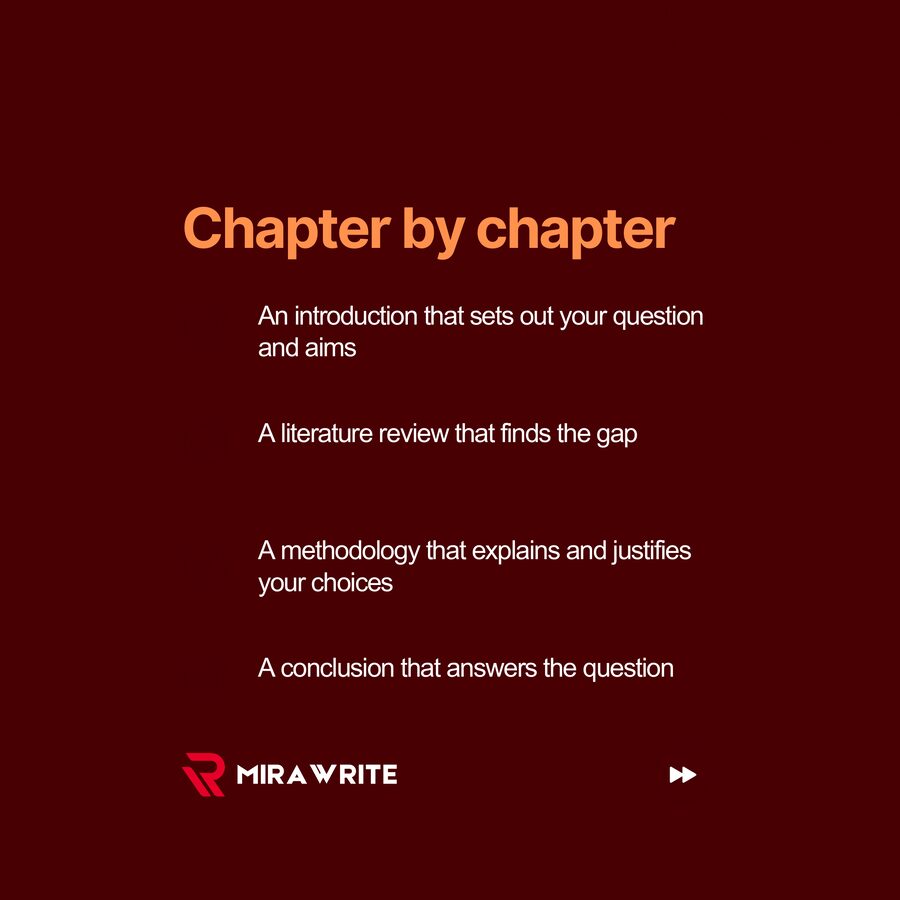
Chapter by chapter

A clear plan makes writing easier

Know what each chapter has to do before you start it. That one habit turns a 15,000-word problem into four smaller ones.

01

Introduction

Sets out your question, your aims and why the study is worth doing.

02

Literature review

Builds the debate from existing work and finds the gap you will fill.

03

Methodology

Explains and justifies the choices behind how you gathered and read your data.

04

Findings & conclusion

Answers the question you asked, and says plainly what it adds.

Whole dissertation or one chapter, your choice. Each of these can be taken by itself:

ProposalIntroductionLiterature reviewMethodology Findings & analysisDiscussionConclusionAbstract
Chapter by chapter — what each chapter must do
Why structure comes first

Timing

How much time is left changes the plan

Tell us the deadline before anything else. It decides what is realistic, and we would rather say so at the start than apologise at the end.

Six weeks or more

Room to settle the structure first and then write into it. This is where a grade band is easiest to commit to, because nothing has to be rushed and every chapter gets a proper read.

  • Full chapter map
  • Draft by draft
  • Time for a rewrite

Two to three weeks

We put the hours where the marks are, usually methodology, findings and the argument running through them, then tidy the chapters that carry less weight.

  • Priority order first
  • Chapters in stages
  • One full pass at the end

Days, not weeks

Still worth asking. We will say plainly what can be done well in the time you have and what cannot, and you decide from there. We do not take on work we cannot stand behind.

  • Honest scope
  • Highest value first
  • No band we cannot meet

What you get back

Specific enough to act on

No vague encouragement. Every round of work ends with something you can open and use.

A chapter map

One page showing every chapter, the job it has to do, the word budget it gets, and the evidence it still needs. Pin it above your desk.

A marked-up draft

Your document with tracked changes and margin comments. Every edit is visible, so you can accept, reject or argue with each one.

A priority list

The fixes ranked by how much they move the grade, with the ones that matter least marked as optional. You always know what to do next.

Get started

Your dissertation, refined

Tell us where you are. Even a half-finished chapter and a deadline is enough to start from.

Send an enquiry
Referencing builds trust